Guide
Ice dam prevention
Why the eave membrane exists, and what else stops a dam.
Updated 2026-10-18 · 7 min read
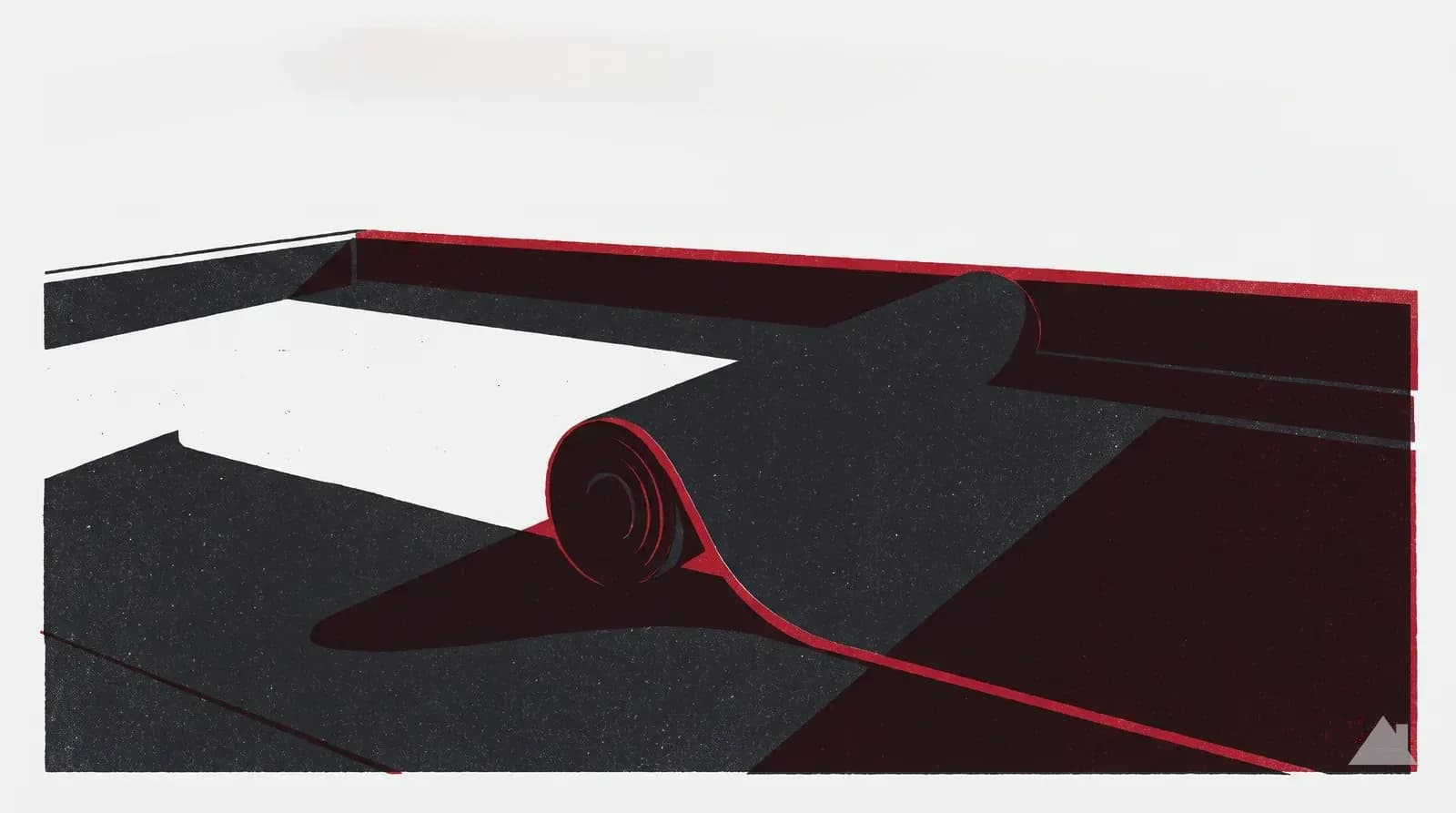
Underlayment is the layer between the deck and the covering. It is not the waterproof layer on a shingle roof — the shingles are — but it is what keeps the house dry between tear-off and dry-in, and what catches whatever gets past the covering afterwards.
Felt is cheap and still perfectly legitimate; it tears in wind, wrinkles when it gets wet, and gets slippery. Synthetic costs more per square, rolls out faster, walks better and survives being left exposed for weeks. Self-adhering membrane is a different animal: it bonds to the deck and closes around every nail driven through it, which is why it is the eave and valley product rather than a field product.
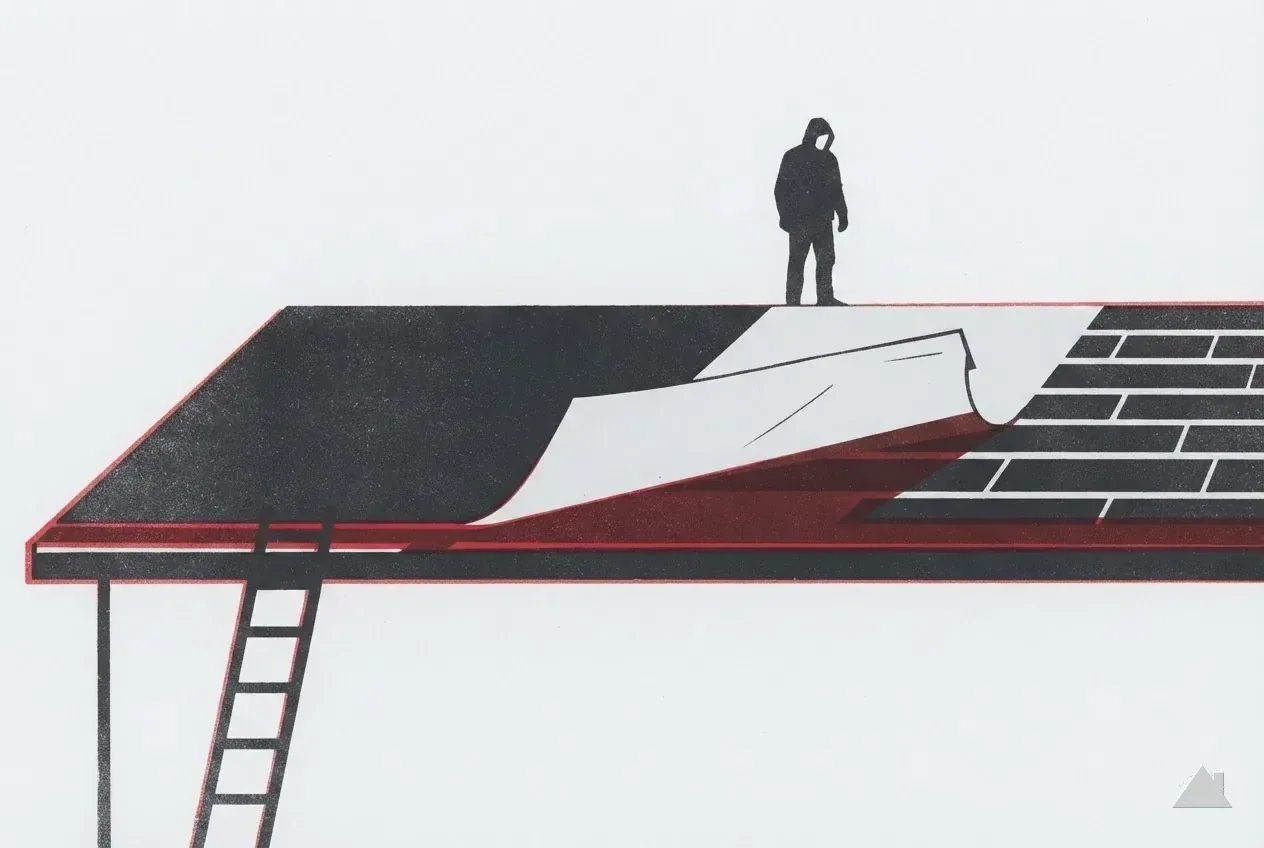
Two places. First, slope: asphalt shingles are permitted down to 2:12, and between 2:12 and 4:12 the code requires a double underlayment application. Second, ice: where eave ice dams have a history, an ice barrier is required — either two layers of underlayment cemented together or a self-adhering polymer modified bitumen sheet — running from the lowest edge of the roof to a point not less than 24 inches inside the exterior wall line.
The 24 inches is measured from the wall, not the eave
On a house with deep overhangs the membrane has to run well past a single course width to land 24 inches inside the wall. On a steep roof with a deep overhang it can take three courses — the underlayment calculator counts them for your eave. Measuring from the drip edge instead is the most common way an ice barrier ends up short.
Underlayment runs horizontally, starting at the eave, each course lapping the one below so water always runs over a seam rather than into it. End laps are staggered. At the eave the drip edge goes on first and the underlayment over it; at the rake the drip edge goes over the underlayment — a reversal that catches people every time, and one the drip edge guide covers in detail.
The failures are ordinary: reverse laps at a valley, membrane left exposed past its rated window and gone brittle, cap nails driven so tight they tear a synthetic sheet, and a self-adhering membrane laid on a dusty deck in cold weather so it never really bonded.
Name the product, not the category. “Synthetic underlayment” covers a twenty-year sheet and a builder-grade one at half the price. State where the ice barrier runs — eaves, valleys, around penetrations, up any wall abutment — and how far. Both lines belong on the estimate sheet, priced by the square and the linear foot respectively. On tile and metal roofs the underlayment matters more than on shingles, because it is doing more of the work — see the tile comparison.
Why the eave membrane exists, and what else stops a dam.
The eave-versus-rake order the underlayment depends on.
Where underlayment sits in the sequence.
Rolls of felt, synthetic and ice-and-water membrane for your roof.
What sits under the underlayment, and why a wet deck never gets covered.