Guide
Asphalt shingle installation
Where drip edge sits in the sequence.
Updated 2026-10-18 · 6 min read
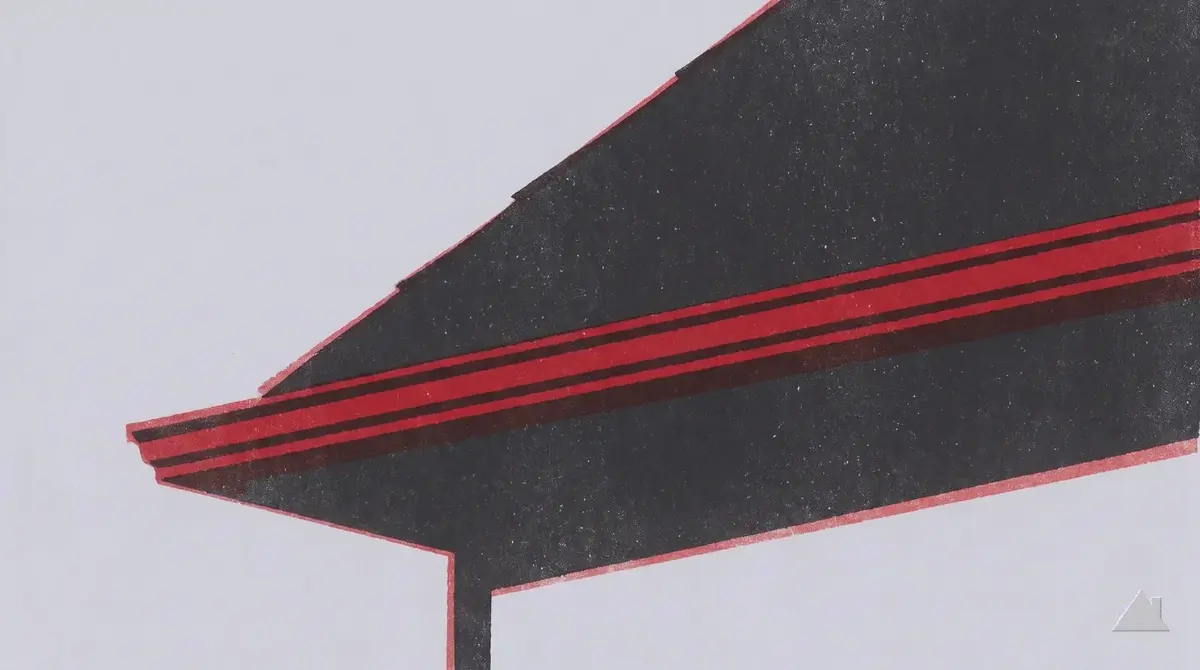
At the eave, the drip edge goes on first and the underlayment lies over it. At the rake, the underlayment goes on first and the drip edge lies over it. Every roofer learns this backwards once.
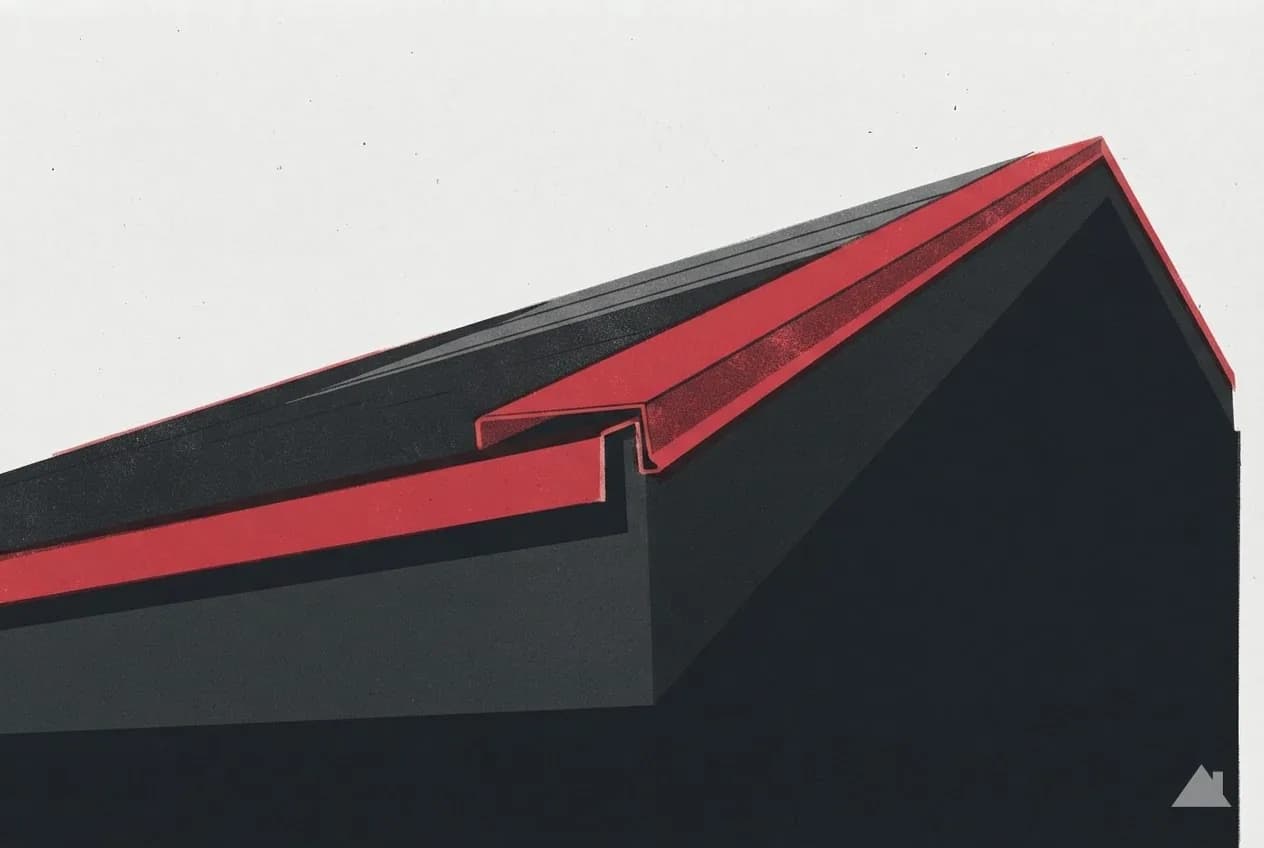
The logic is water. At the eave, water reaching the underlayment must run off the underlayment, onto the metal and away — so the metal has to be underneath. At the rake, water runs down the slope rather than off the edge, so the metal on top keeps wind-driven rain from getting behind the underlayment at the gable.
Those are minimums, and the 2-inch return onto the deck is the one most often shaved. A metal that only just reaches the deck cannot be nailed properly and lifts in wind.
Water wicks back under the shingle edge and onto the fascia. The fascia rots, then the sheathing behind it, then the rafter tails. It is slow, invisible from the ground and expensive by the time anyone notices — which is exactly the profile of a defect that gets left off a cheap bid.
Check it is a line item
Drip edge at eaves and rakes should appear on the estimate by the linear foot. If it is not there, ask. Reusing the old drip edge is common and is a false economy on a roof that will outlive the metal.
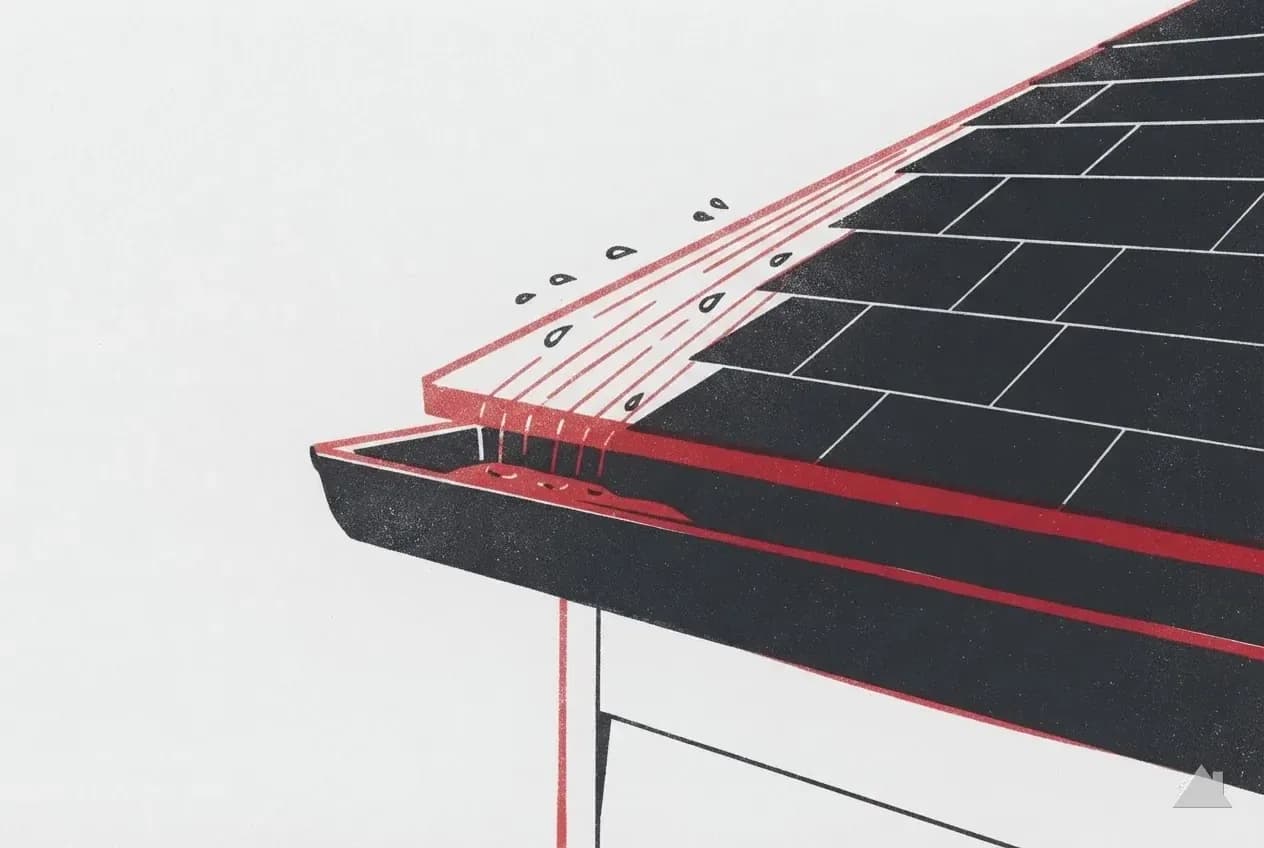
The whole point at the eave is to throw water past the fascia and into the trough. A drip edge that ends behind the gutter’s back edge does the opposite. Where gutters are being replaced at the same time — which is the cheap moment to do it, see the gutter calculator — set the metal so it discharges clear inside the trough.
Where a wall runs down to a gutter, the last piece of step flashing must be a kick-out that throws water outward into the trough rather than behind it; that detail is on the flashing guide and is among the most expensive omissions in residential construction.
Where drip edge sits in the sequence.
The kick-out and everything else at an edge.
The trough the drip edge is aiming at.
All eave on a hip, eaves and rakes on a gable.
What a tear-off lets you rebuild at the eave and an overlay buries.