Tool
Attic ventilation calculator
The first fix, sized to the code ratio.
Updated 2026-10-18 · 8 min read
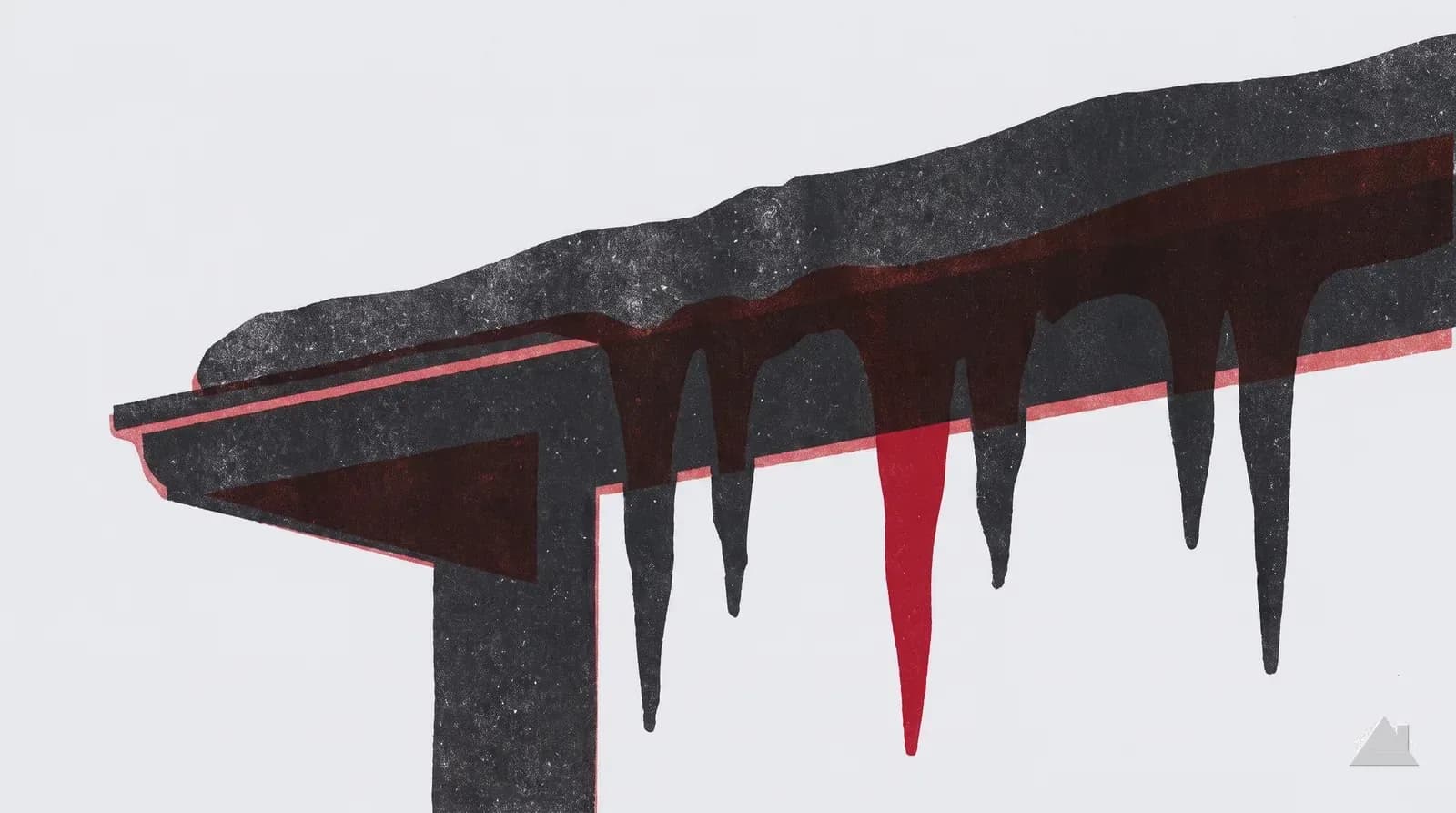
Heat leaking from the house warms the underside of the deck over the heated part of the roof. Snow on that section melts, the water runs down, and at the eave — which overhangs unheated space — it refreezes. Each cycle builds the ice a little further up the slope, and behind the dam standing water backs up under the shingles, which were never designed to hold water, only to shed it.
The tell is a clear melted band above the wall line with snow still lying below it. That is the heated part of the roof announcing itself.
One: ventilation. A cold roof deck cannot melt snow. Intake at the soffit and exhaust at the ridge, sized to the code’s 1/150 net free area (or 1/300 where the exception applies) and split roughly half low, half high. Check yours on the ventilation calculator.
Two: air sealing. Ventilation removes heat that has already arrived; sealing stops it arriving. Recessed lights, attic hatches, plumbing stacks, top plates and duct penetrations are the routes. This is the fix that most reliably ends a dam and the one most often skipped, because it happens in an attic rather than on a roof.
Three: insulation. Depth at the eave matters more than depth in the middle. Baffles keep the soffit intake open while insulation runs right out over the top plate, which is exactly where most attics are thin.
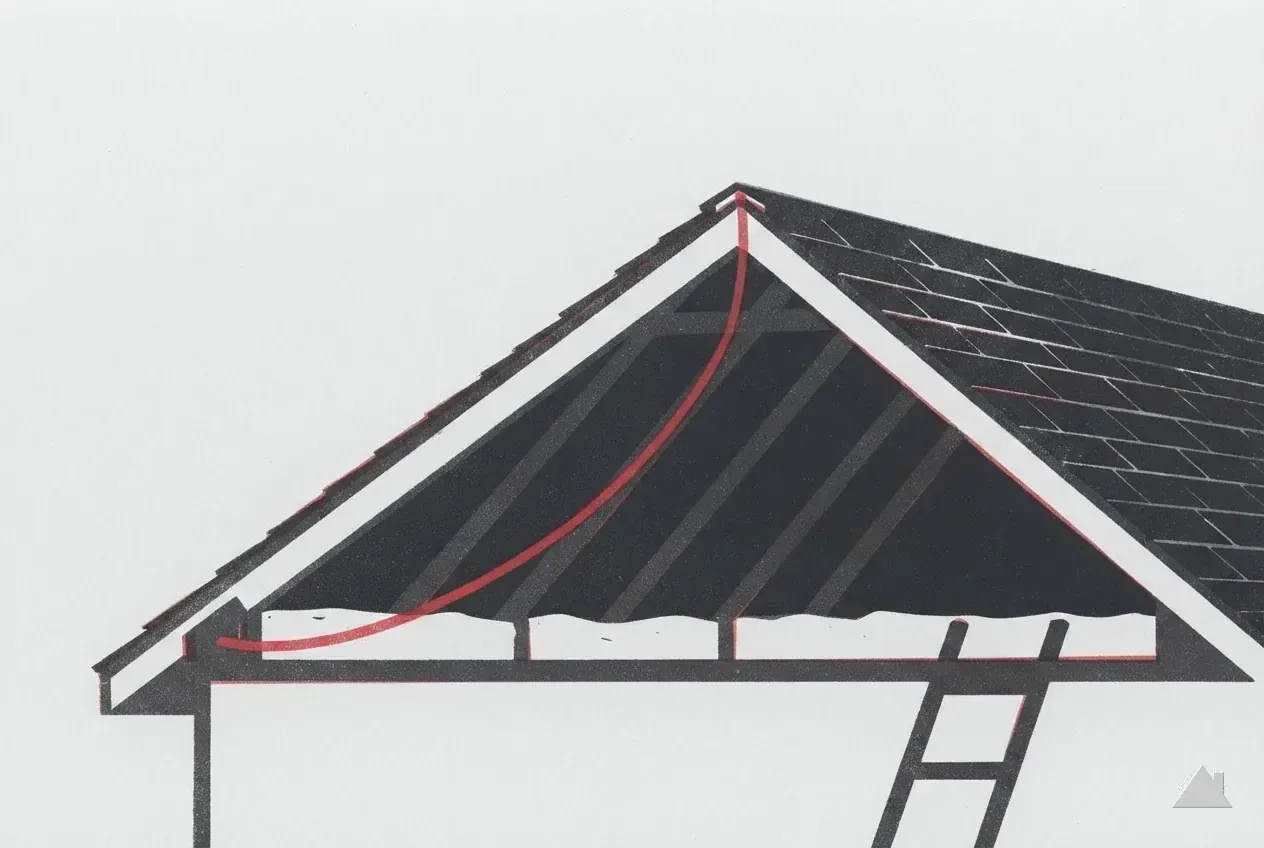
Where eave ice has a history, the code requires an ice barrier from the lowest edge of the roof to at least 24 inches inside the exterior wall line — the underlayment guide covers what counts as one, and the underlayment calculator counts the courses for your eave. The membrane seals around nails and holds standing water — which is precisely what a dam creates.
It stops the leak, not the dam
An ice barrier keeps water out of the house while the dam sits there. It does nothing about the gutters it tears off, the shingles it lifts or the fascia it soaks. Fix the heat first; specify the membrane because the code and the climate both ask for it. The underlayment guide has the products.
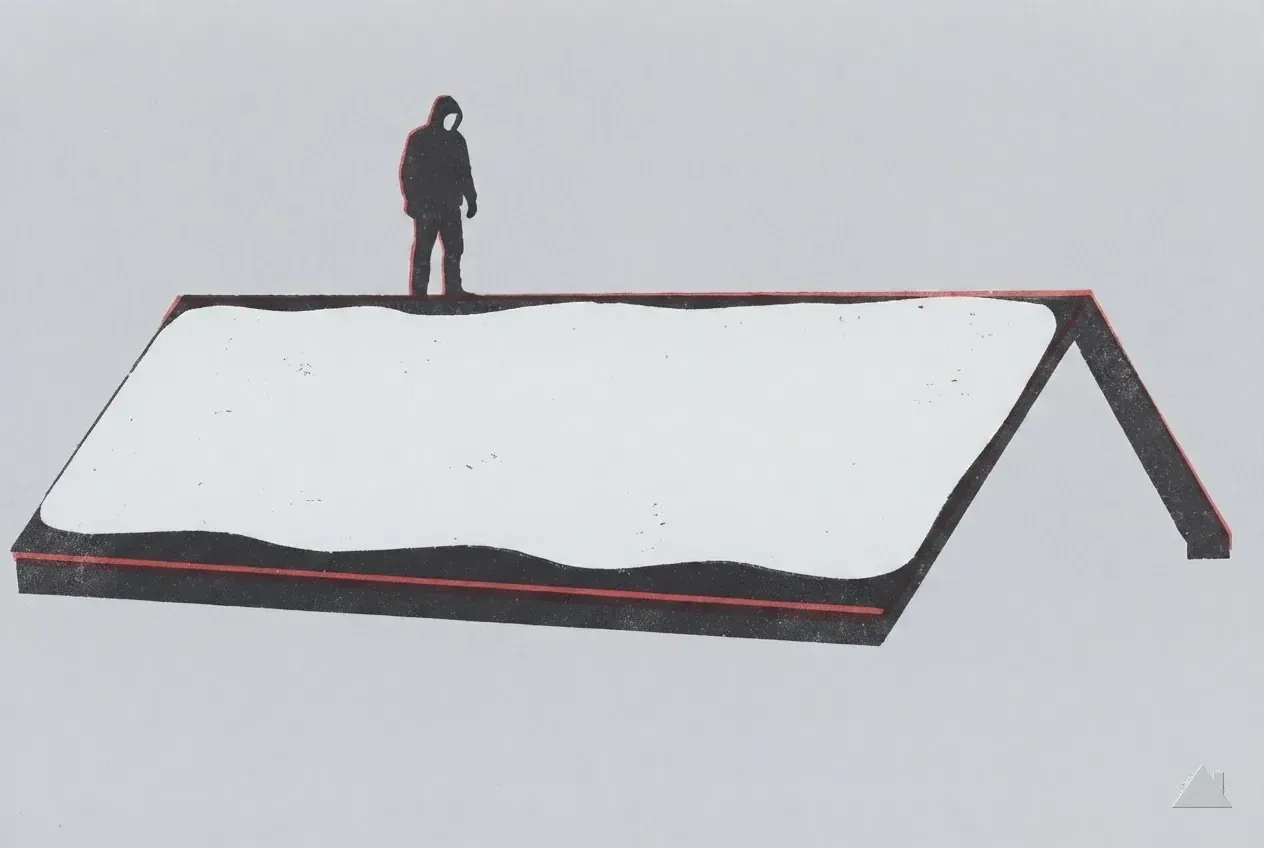
Steam, not an axe. A professional ice-dam service melts channels through the ice with low-pressure steam, which removes the dam without removing the shingles. Chipping with hand tools takes granules, tabs and sometimes flashing with it, and turns a winter nuisance into a spring repair bill. Calcium chloride in a stocking laid across the dam opens a drainage channel and is the safe amateur option; rock salt corrodes metal and kills planting below.
The first fix, sized to the code ratio.
The membrane the code asks for at the eave.
What a season of backed-up water costs underneath.
Choosing the exhaust half: one continuous ridge or a row of louvers.
Price new gutters by the foot while you fix the eave.