Guide
Slate roof cost
The other heavy covering, and the same structural question.
Best overall — architectural asphalt, on a house not framed for tile.
Best on a budget — architectural asphalt, by a wide margin.
Longest life — clay tile, on a house that was designed to carry it.
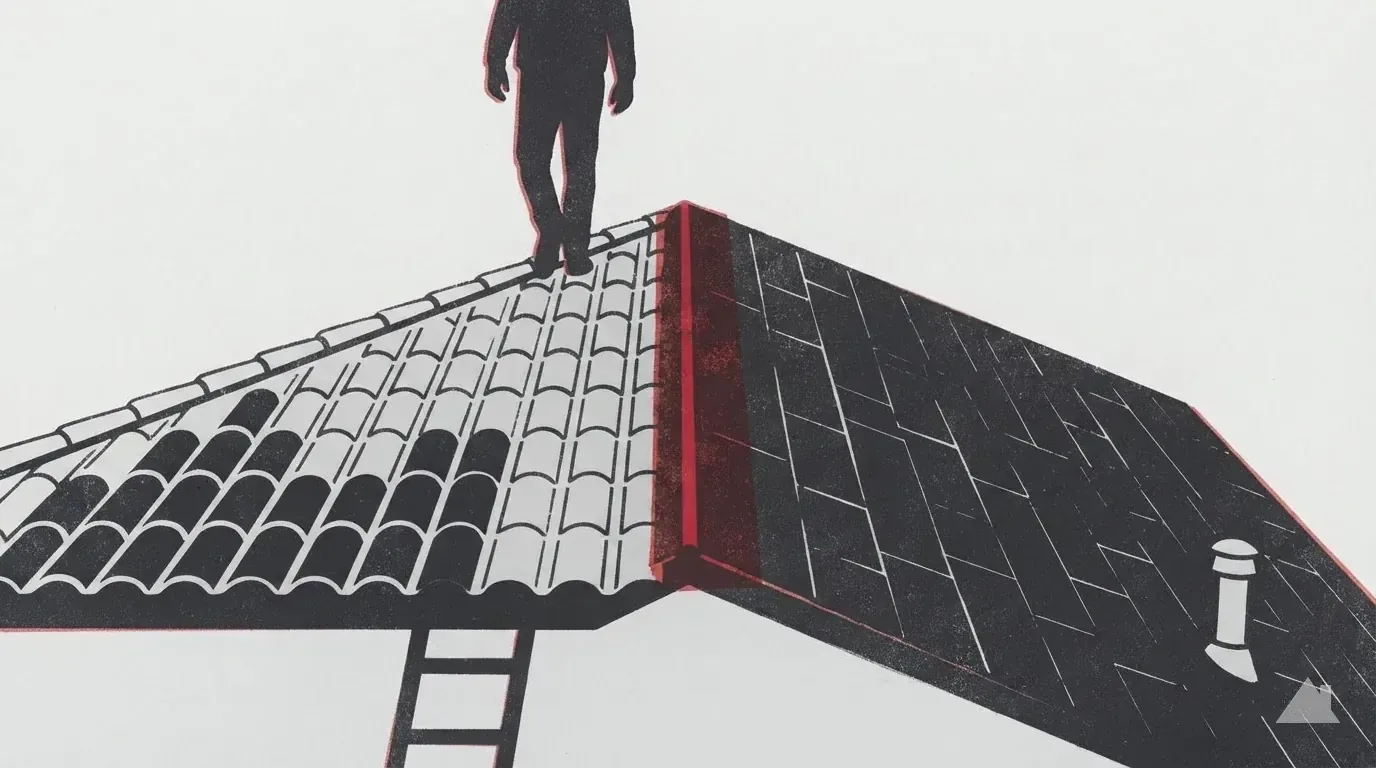
Our pick — Architectural asphalt: unless the framing was designed for a tile roof, this is not a close decision
| Architectural asphalt | Concrete tile | Clay tile | |
|---|---|---|---|
| Installed $ / square | $400–$800 | $700–$1,200 | $700–$1,400 |
| Service life | 25–30 yr | 50+ yr | 100+ yr |
| Dead load | light | heavy | heavy |
| Framing usually adequate | |||
| Walkable for maintenance | |||
| Handles hard freeze cycles | |||
| Colour holds over decades | |||
| Individual piece replaceable |
Tile is a heavy covering and asphalt a light one, and the difference lands on every rafter, every wall and every footing. A house framed for shingles usually needs an engineer’s check, and often structural work, before it can carry tile — and that work is priced the way slate reinforcement is priced — $1,000 to $10,000 depending on what the engineer finds. In the southwest, where tile is the vernacular, houses are framed for it from the start and the question never arises.
Tear-off / structural
Never convert a shingle roof to tile without a structural engineer’s assessment of the existing framing. The load increase is not marginal, and a roof that deflects slowly gives no warning until doors stop closing.
The same 21-square roof, installed, at the bottom and top of each band. Clay tile averages about $994 a square nationally, inside the band below; the profile (flat, mission, Spanish, French) moves it within the range. Run your own square count on the replacement cost calculator.
| Covering, 21 squares | Low | High |
|---|---|---|
| Architectural asphalt | $8,400 | $16,800 |
| Concrete tile | $14,700 | $25,200 |
| Clay tile | $14,700 | $29,400 |
Add the structural line to the tile rows if the framing was not designed for tile, and check the snow case too — a heavy covering under a heavy snow load is exactly what the snow load calculator is for. The deck under tile matters as well; the OSB vs plywood comparison covers thickness by rafter spacing.
Concrete tile is cheaper, comes in more profiles and holds up to freeze-thaw better. Clay costs more, lasts longer — around a century against concrete’s fifty-plus years — and keeps its colour because the colour is the fired body rather than a surface coat. Its weak point is cold: clay can crack where it freezes and thaws repeatedly, so in a hard winter climate ask for a tile the manufacturer rates for freeze-thaw exposure. Both are batten-mounted systems where the underlayment, not the tile, is the waterproof layer, which is why a tile roof’s real service interval is the underlayment’s, not the tile’s.
Under tile, water that gets past the tile runs on the underlayment to the eave. That membrane is what usually fails first, long before the tile does, and replacing it means lifting and re-laying every tile. Budget for one underlayment cycle inside a tile roof’s life; the underlayment guide covers the grades that belong under tile.
Asphalt wins on first cost, on any house not framed for tile, and on maintenance access — a crew can walk it. If you want the look of something heavier without the load, a designer laminate is the usual compromise; the architectural vs 3-tab comparison prices all three asphalt grades. Tile wins on life and colour where the house was built for it, which is why it is the vernacular roof across the hot, dry southwest and why a tile roof there is replaced underlayment-first rather than tile-first.
Buying checklist
The other heavy covering, and the same structural question.
The layer that is actually keeping a tile roof dry.
Tile and asphalt on your own square count.
The other load a heavy roof has to carry.