Guide
Chimney flashing repair cost
Reflash against patch, and what masonry work adds.
Updated 2026-10-18 · 8 min read
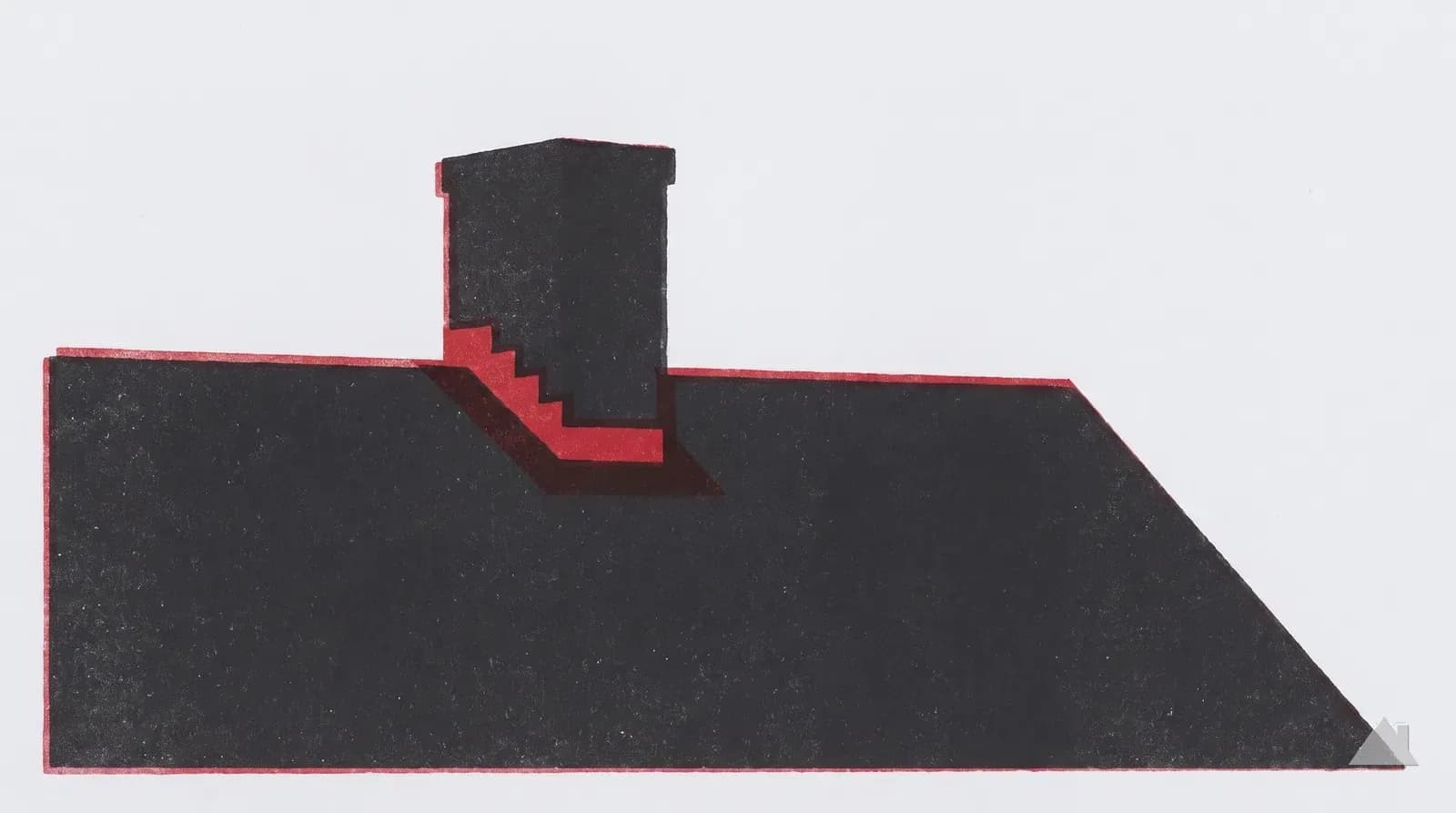
Shingles keep water off a plane. Every place two planes meet, or something comes through one, is where the plane stops working — and that is what flashing is for. A roof almost never fails in the middle of a slope. It fails at a chimney, a valley, a wall, a skylight. Which is why a bid that reuses existing flashing is not a cheaper roof; it is a shorter one.
| Type | Where | Form |
|---|---|---|
| Step | Where a slope meets a vertical wall | One L-shaped piece per course, woven in |
| Counter | Over step flashing on masonry | Set into a cut mortar joint, folded down |
| Apron (headwall) | Where a slope ends at a wall | One continuous bent piece |
| Valley | Where two slopes meet | Open metal, or a woven / closed-cut course |
| Kick-out | Where a wall ends above a gutter | A flared last step piece |
| Pitch transition | Where a slope changes angle | A wide bent piece under the upper course |
The valley detail is a design choice of its own — open, closed-cut or woven — and it is covered on the valley guide.
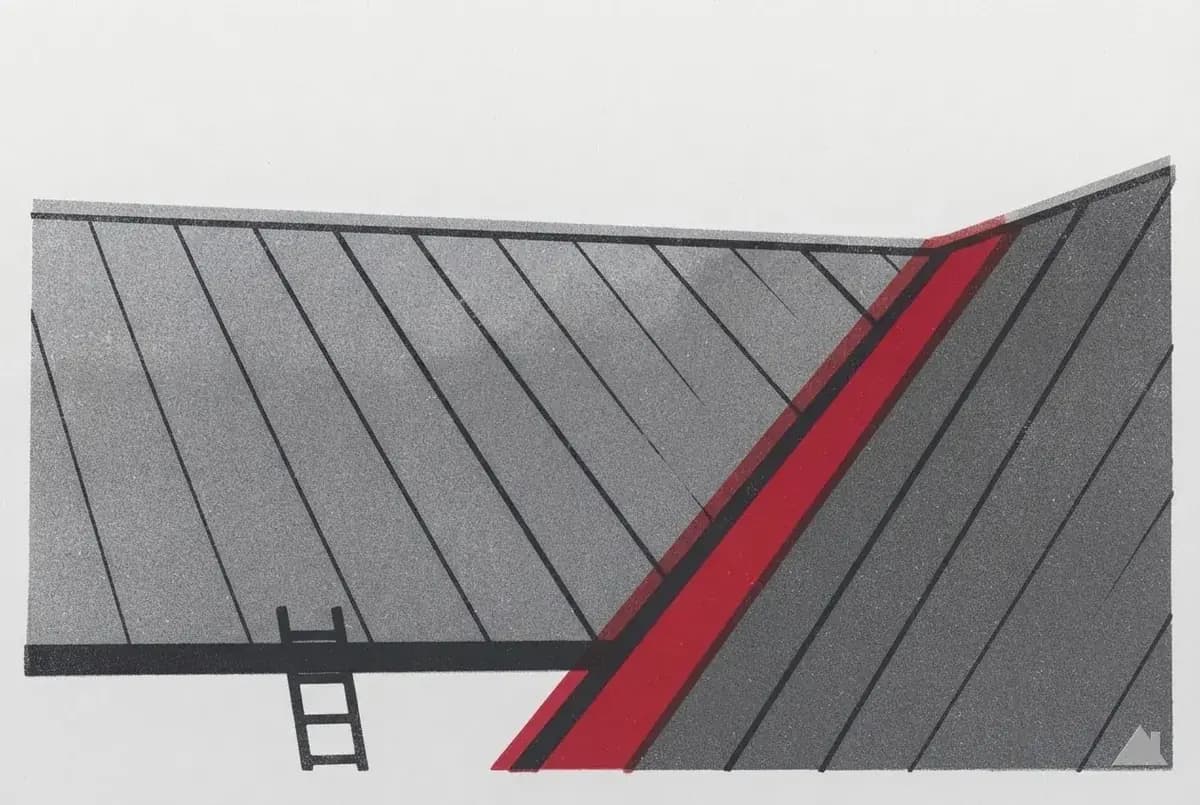
Step flashing replaced by a continuous strip and caulk. The single commonest defect on any re-roof. Caulk lasts a few seasons; a woven step lasts as long as the roof.
Counter-flashing surface-mounted instead of let into the mortar. Sealed to the face of the brick, it peels. Cut into a reglet, it does not.
No kick-out at the bottom of a wall. Water runs off the roof, behind the gutter and straight down inside the wall. It rots sheathing invisibly for years and is one of the most expensive defects in residential construction.
Valley metal too narrow, or shingles run to the centre. Ice and debris back water sideways under the courses.
Reused flashing is the silent saving
Old flashing put back under new shingles is invisible on handover day and is the reason a five-year-old roof leaks. Ask for “all new flashing” as a line item on the estimate, and check it is there on all three bids.
Reflashing a chimney alone runs $200 to $3,500 — see the chimney flashing guide — which is why it is far cheaper to insist on it during a re-roof than to buy it separately three years later.
Reflash against patch, and what masonry work adds.
Open, closed-cut and woven, and where each fails.
Leak source to price — most of them are flashing.
How low-slope membranes are flashed and seamed.