Guide
The insurance claim process
ACV, RCV, depreciation and supplements.
Updated 2026-10-18 · 9 min read
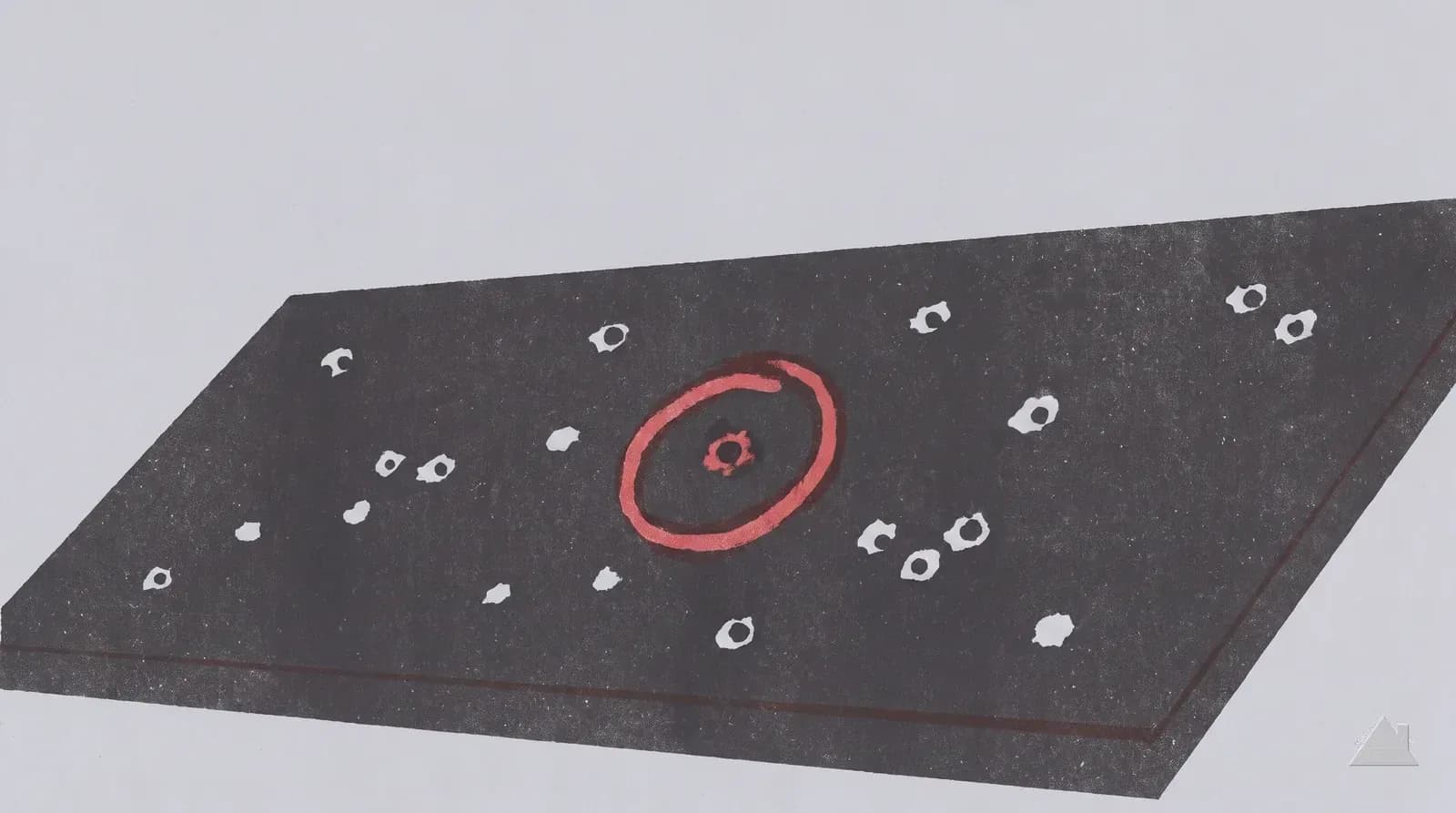
Hail damage on asphalt is a bruise, not a hole. Press the mark: a genuine hit is soft under the thumb because the mat beneath has fractured, and the granules are gone in a roughly circular patch with a dark centre. It is random across the plane, and it is worse on the slopes facing the storm. Marks in straight lines, at regular spacing, or only where a ladder stood are not hail.
The soft metals confirm it. Look at the gutters, the vent caps, the flashing and any aluminium fascia: hail heavy enough to bruise a shingle dents soft metal, and metal does not weather the way granules do. If the metals are clean the marks are probably age.
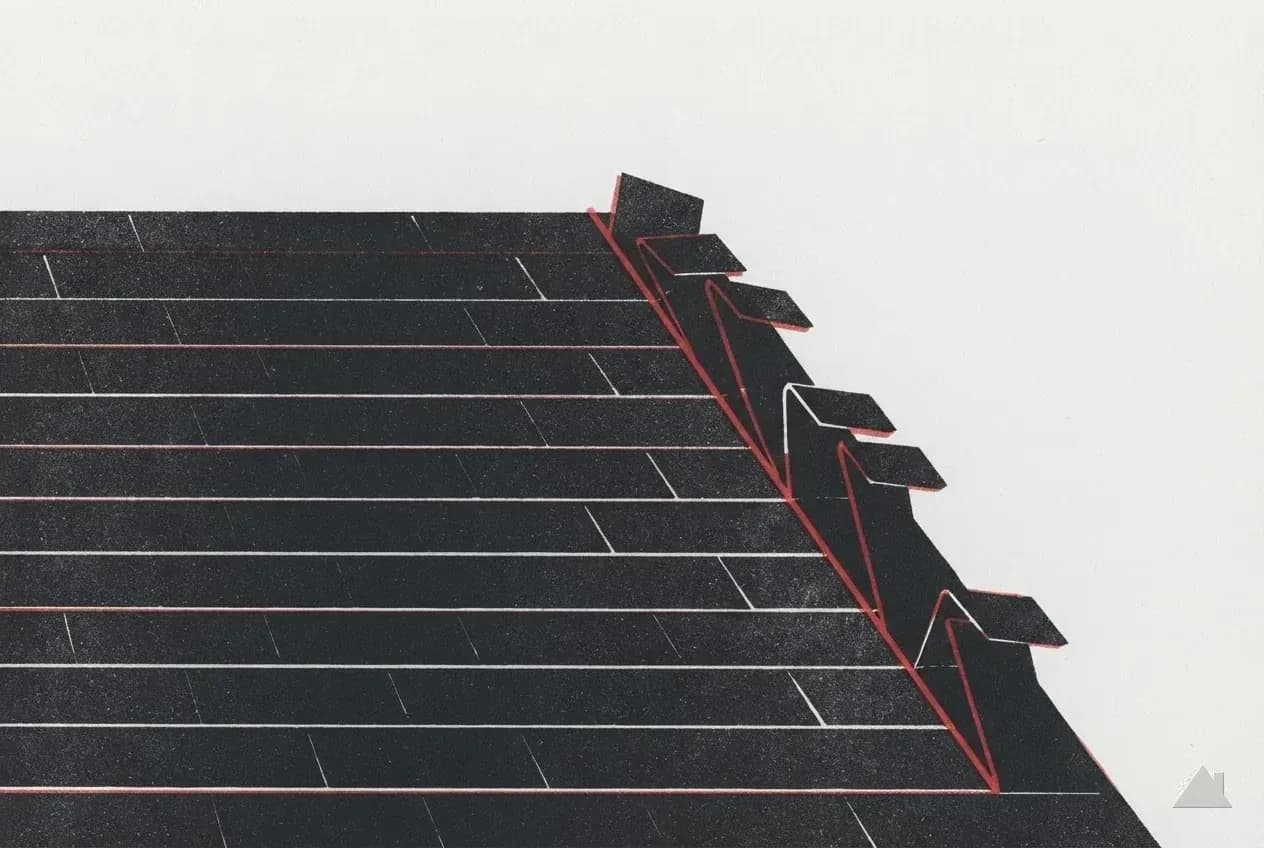
Wind failure starts at an edge — a rake, an eave, a ridge — and runs. Look for tabs folded back, creases across a shingle where it flexed past its limit, and courses that have lost their seal but are still lying flat. That last one is the dangerous finding: a shingle can be unsealed and undamaged-looking, and it will go in the next storm. Lift a few tabs by hand along the windward rake; if they come up without resistance, the seal strip has failed.
Cosmetic
Granule scatter with no soft spots, minor dents in gutters, no unsealed tabs. Note it, photograph it, monitor it. Nothing is leaking and nothing will.
Repairable
A handful of bruises or unsealed tabs confined to one slope, flashing intact, deck sound. A patch and a re-seal, priced on the repair cost guide.
Replace
Bruising past the test-square threshold your adjuster uses, tabs missing across multiple slopes, or wind creasing along a whole rake. The covering’s life has been taken; a repair buys nothing.
Tear-off / structural
Decking punctured, rafters cracked, a tree strike, or standing water in the ceiling. Nobody walks it. Get it covered, get it braced, get an engineer.
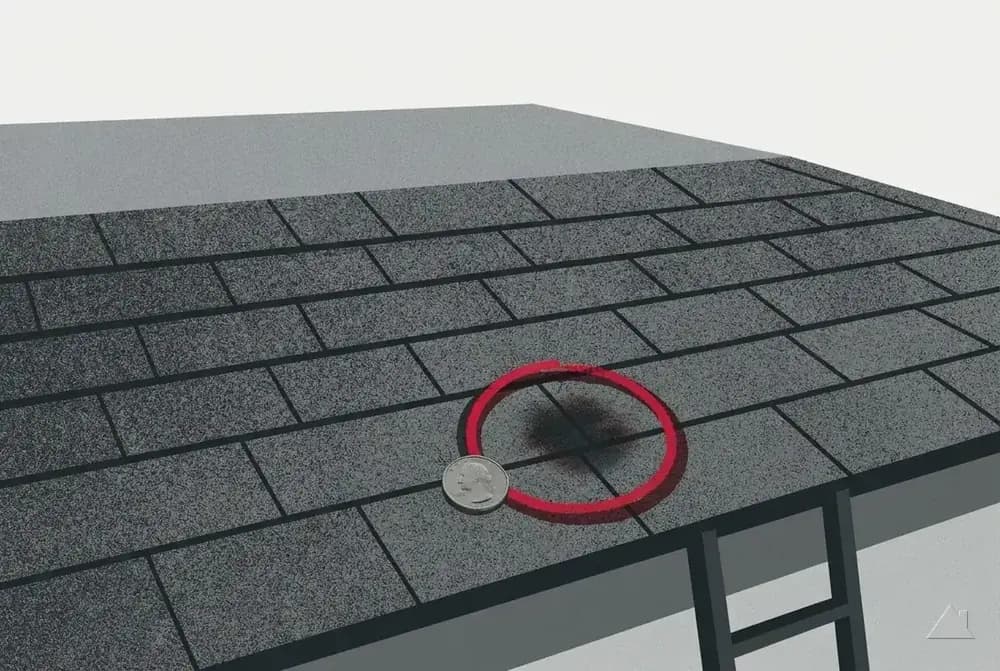
Photograph the whole roof slope by slope before anything is cleaned, tarped or repaired, and put something of known size beside each mark — a coin, a tape, a chalk circle. Note the date and time of the storm, not the date you looked. Photograph the soft metals and the ground-level damage too: dented gutters and a stripped fence corroborate the roof.
Then walk the whole roof with the inspection checklist so nothing is missed, and take it into the claim process. A paid independent inspection at $307–$571 before the adjuster arrives is money well spent on a contested claim.
ACV, RCV, depreciation and supplements.
Every zone, in the order a roofer walks it.
What each finding costs to put right.
Which shape holds up better in high wind, and why.
Re-seal or replace: fixing what the storm lifted.