Guide
Labour cost per square
Production rates and the modifiers that move them.
Updated 2026-10-18 · 8 min read
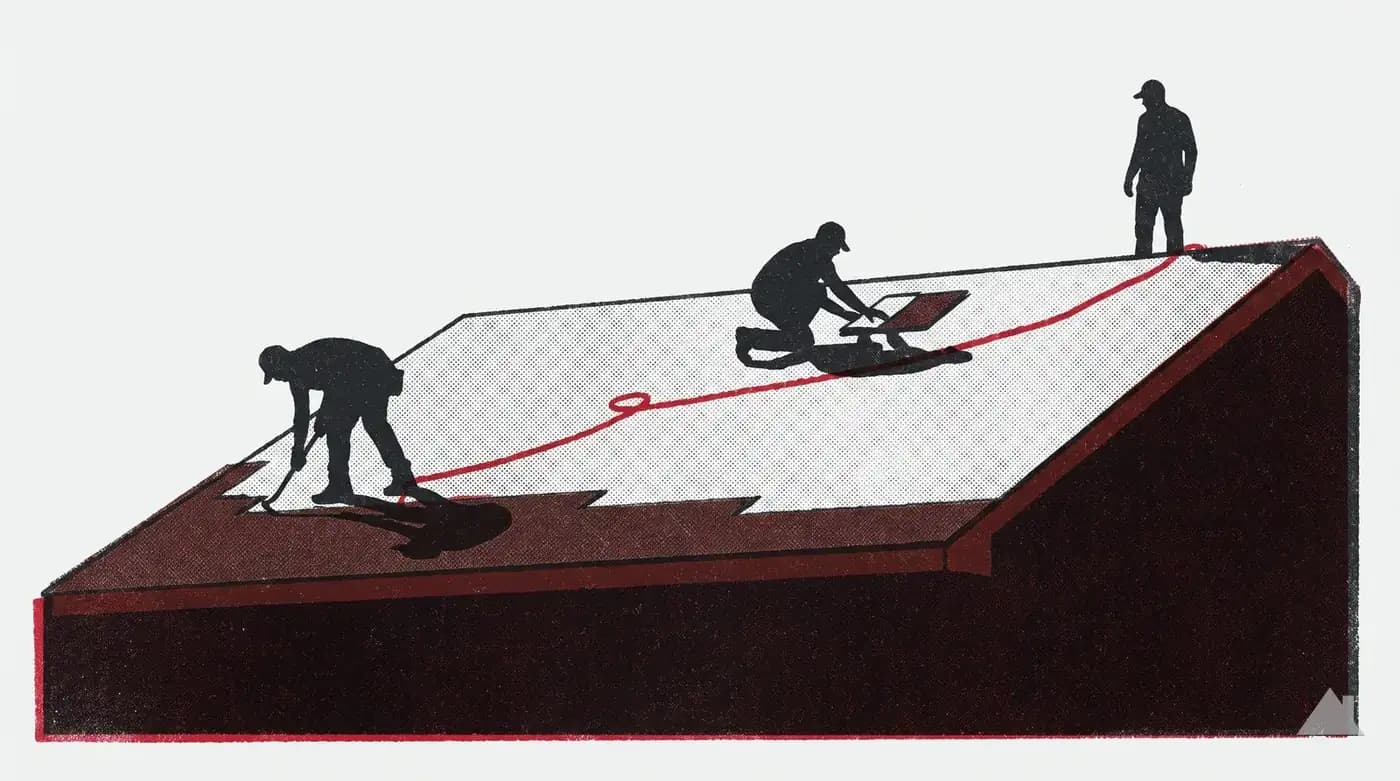
Federal occupational wage data puts 135,490 roofers in the United States at a mean of $27.95 an hour, or $58,140 a year. The median — the middle roofer, which is the more useful figure — is $26.65 an hour, $55,440 a year.
| Percentile | Hourly | Annual |
|---|---|---|
| 10th | $18.01 | $37,460 |
| 25th | $22.24 | $46,260 |
| 50th (median) | $26.65 | $55,440 |
| 75th | $31.44 | $65,390 |
| 90th | $39.29 | $81,720 |
The spread from the tenth to the ninetieth percentile is more than double — $37,460 to $81,720. Very little of that is skill in the abstract; most of it is geography, union coverage and whether the work is year-round.
| State | Annual mean |
|---|---|
| Illinois | $77,650 |
| New Jersey | $74,380 |
| Massachusetts | $72,990 |
| Minnesota | $72,920 |
| New York | $69,350 |
| Washington | $68,870 |
| Alaska | $68,450 |
| California | $67,420 |
| Michigan | $61,450 |
| Hawaii | $61,430 |
| Florida | $48,870 |
| Texas | $47,200 |
The top of that table is roughly $30,450 above the bottom. Two forces do most of it. Cold-climate states have a short season, so the day rate has to carry more of the year — and they are also where union residential and commercial work is concentrated. Warm states have year-round work, a larger labour pool and a lower hourly figure that can still add up to comparable annual earnings.
Very few residential roofers are paid a straight hourly wage. The common structures are piece rate — so much per square laid, which rewards speed and is why supervision matters; day rate for tear-off and clean-up, where the work does not divide neatly by square; and a foreman on salary with a crew on piece. Commercial and union work is more often hourly with a schedule.
Piece rate is not the same as cheap
A crew on piece rate has a direct financial incentive to lay fast, and a good contractor prices supervision into that. When a bid is far below its neighbours, the saving is usually supervision rather than wage — and supervision is what catches a nail line drifting high.
The wage is not the cost. Add payroll taxes, workers’ compensation at roofing’s rate — among the highest of any trade — general liability, vehicles, fuel, tools and the days weather takes away, and a loaded crew hour sits well above the base wage before any overhead or margin. That is why labour is 40–60% of an installed price rather than the smaller share a bare wage would suggest. The production rates behind it are on the labour-per-square guide, and the effect on a whole job is on the cost calculator.
Production rates and the modifiers that move them.
Where the labour half lands in the price.
The other cost of doing the job properly.
Where the wage sits inside a bid price.